
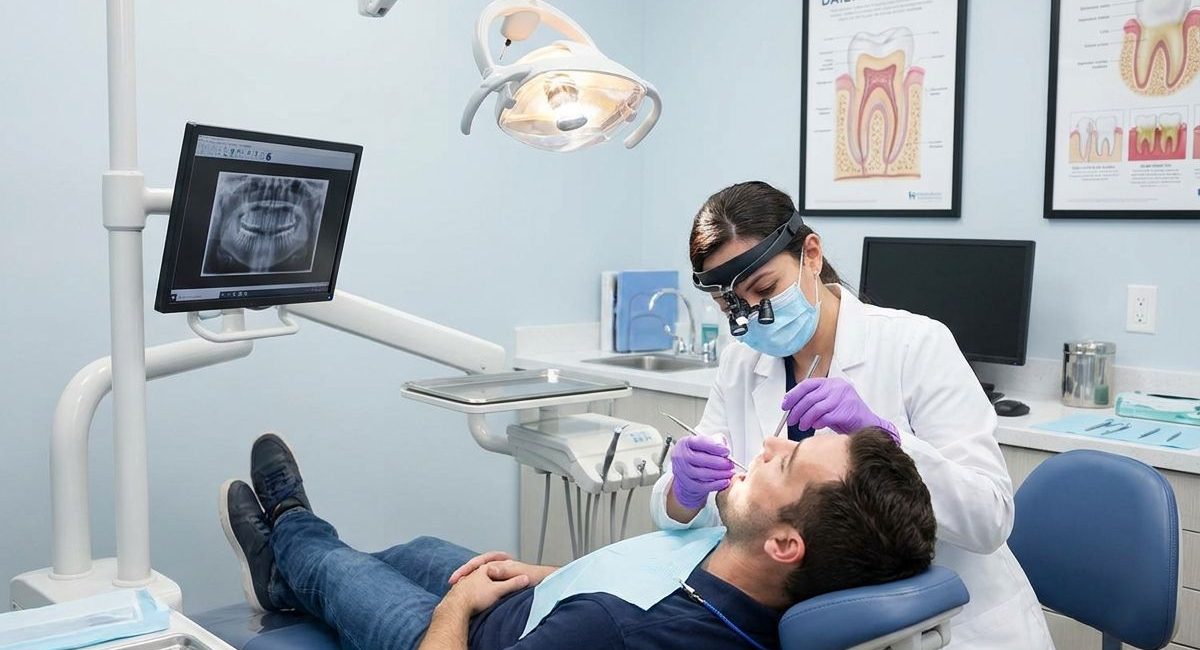
People walk into dental offices thinking they know what happens there. Cleaning, drilling, maybe a filling. But spend a day shadowing an actual dentist and you quickly realize the job is nothing like that simple picture. There is a lot going on behind those gloves and that overhead light, and most patients never see the full scope of it.
Looking at What Your Eyes Cannot Catch
The exam that happens before any treatment is more thorough than most people give it credit for. A dentist checks teeth, yes, but also gums, the inside of cheeks, the floor of the mouth, the tongue, and the throat. They press on lymph nodes. They look for swelling, color changes, and tissue that does not look right.
X-rays fill in the rest. Bone levels, root tips, infections brewing inside a tooth with no outward symptoms, early signs of cysts in the jaw. None of that is visible without imaging. Reading those films takes years of training and pattern recognition built up through clinical experience. A shadow in the wrong spot on an X-ray is not nothing. It is a finding that changes the treatment plan entirely.
And then there is the oral cancer check. Most patients do not know this is happening. The dentist is quietly scanning for anything suspicious during a routine visit. That five-minute exam has caught serious conditions early in people who had zero symptoms.
Preventing What Has Not Happened Yet
Preventive care is genuinely the core of modern dentistry, though it does not always get treated that way by patients who skip appointments. Tartar that has hardened onto teeth cannot be brushed off. It bonds to the surface and requires specific instruments to remove. Left alone, it irritates the gum tissue and creates conditions where periodontal disease develops.
Sealants painted onto the chewing surfaces of molars block bacteria from getting into grooves where toothbrush bristles cannot reach. Fluoride treatments strengthen enamel against acid. These are not fancy procedures but they genuinely reduce the number of cavities patients develop over years of follow-up care. The research on this is not new or controversial. It is settled and consistent.
Fixing Teeth That Are Already in Trouble
Decay does not wait for a convenient time to show up. When a cavity forms, the dentist removes the infected portion and restores the tooth with a filling material. The goal is to stop the decay from spreading to deeper layers of the tooth and eventually reaching the nerve.
More advanced damage calls for different solutions. A tooth cracked in half might need a crown placed over it to hold the structure together. A tooth whose nerve has become infected needs a root canal before the crown can go on. A tooth that cannot be saved needs to come out, and then the space it left behind creates its own set of problems if nothing replaces it. Adjacent teeth drift, bite mechanics shift, and jaw bone in that area starts to resorb because there is no tooth root stimulating it anymore.
Bridges and dentures address tooth loss. So do implants, which function more like natural teeth than any other replacement option. Restorative work is not about aesthetics. It is about maintaining function, structure, and long-term health of the mouth as a whole.
Gum Disease Gets Ignored Until It Gets Serious
Bleeding when you brush is not normal, even though a lot of people treat it like it is. A dentist measures pocket depths around each tooth to track gum health. Healthy pockets are shallow. Deeper pockets indicate that gum tissue has pulled away from the tooth and that bacteria have moved in underneath.
When that progresses to periodontitis, a regular cleaning does not cut it. The dentist or hygienist performs scaling and root planing, which cleans the root surface below the gumline and removes the buildup that has accumulated there. It is uncomfortable. It often requires local anesthetic. And it has to be maintained with more frequent follow-up visits, because the condition does not disappear. It gets managed.
What makes this more serious than most patients understand is that the bacteria involved in gum disease do not stay in the mouth. They enter the bloodstream. Studies have found associations between untreated periodontitis and heart disease, stroke, poorly controlled diabetes, and preterm births. A dentist treating gum disease is doing more than saving teeth.
Surgery Is Part of the Job Description
Extracting a tooth that has broken below the gumline is a surgical procedure. So is removing a wisdom tooth that is wedged against the adjacent tooth and covered by bone. These are not uncommon situations. They happen in general dental offices every week.
The dentist administers anesthesia, cuts tissue if needed, removes bone when required, extracts the tooth in sections sometimes, and sutures the site closed. The patient needs post-operative instructions and a follow-up. Managing complications like dry socket or infection afterward is also the dentist’s responsibility. None of this is simple work, even when it looks routine from the outside.
Anesthesia and Medications Are Not Afterthoughts
Local anesthesia administration is a skill that takes time to develop properly. Different nerves in the mouth require different injection sites and techniques. Getting it wrong means the patient feels the procedure. Getting it right means they feel nothing. The dentist decides how much to use, where exactly to place it, and when the tissue is numb enough to proceed safely.
Prescribing medications follows the same logic. Not every extraction needs antibiotics, and not every post-procedure patient needs narcotics. A dentist weighs the clinical picture, the patient’s health history, their allergy profile, and the nature of the procedure before writing a prescription. That judgment is not something that can be automated or delegated.
Treatment Planning Takes More Time Than the Procedure
The work that happens before any drilling or injecting is often what separates good dental care from rushed dental care. A dentist reviews the full clinical picture, decides which issues are urgent and which can wait, sequences the treatment in a logical order, and presents it to the patient in a way that makes sense.
For a child, that plan includes watching jaw development, tracking whether permanent teeth are coming in straight, and identifying crowding early enough to address it without major intervention. For an adult with multiple issues, it means prioritizing what poses the most immediate risk and working outward from there. For an elderly patient, it might mean working around medical conditions and medications that affect healing and bleeding.
A treatment plan is not a sales pitch. It is a clinical roadmap built around a specific patient’s needs.
What Patients Get Told Matters
Dentists who explain what they are seeing and why they are recommending specific treatment get better cooperation from patients. That is just how it works. A patient who understands that their back gum pocket has deepened significantly since their last visit is more motivated to come back in four months than one who was simply told to floss more.
Explaining brushing technique, showing patients where their problem areas are, talking through dietary habits that are destroying enamel, walking through why their gums bleed, these conversations take time but they change outcomes. Patient education is not a nice extra. It is part of clinical care.
Referring Out When Someone Else Can Do Better
A responsible dentist knows their limits. Root canals on curved or calcified canals often get referred to an endodontist. Complex periodontal cases go to a periodontist. Significant crowding and bite problems get sent to an orthodontist. Complicated extractions and jaw surgeries go to oral surgeons.
Making the right referral at the right time is a clinical decision that directly affects patient outcomes. The general dentist remains the coordinator, keeping records current and managing everything that falls within their scope.
Running a Practice Is Its Own Responsibility
Outside the clinical work, dentists are responsible for detailed patient records that document every exam, diagnosis, treatment note, medication prescribed, and consent conversation. These records have legal weight and serve as the foundation of continuity of care if a patient ever switches providers.
They also manage their staff. Hygienists, dental assistants, front desk personnel all work within the environment the dentist creates. Sterilization protocols, infection control procedures, and quality standards are the dentist’s responsibility to establish and maintain. If those slip, patients are put at risk.
Continuing education hours are required for license renewal, but the best dentists go beyond the minimum. New bonding materials, updated treatment protocols, improved diagnostic tools, the field shifts and practitioners who keep up with it deliver genuinely better care than those who rely entirely on what they learned before graduation.
The dentist sitting across from you in that chair is doing considerably more than most people ever think about. That is probably worth keeping in mind the next time an appointment rolls around.