
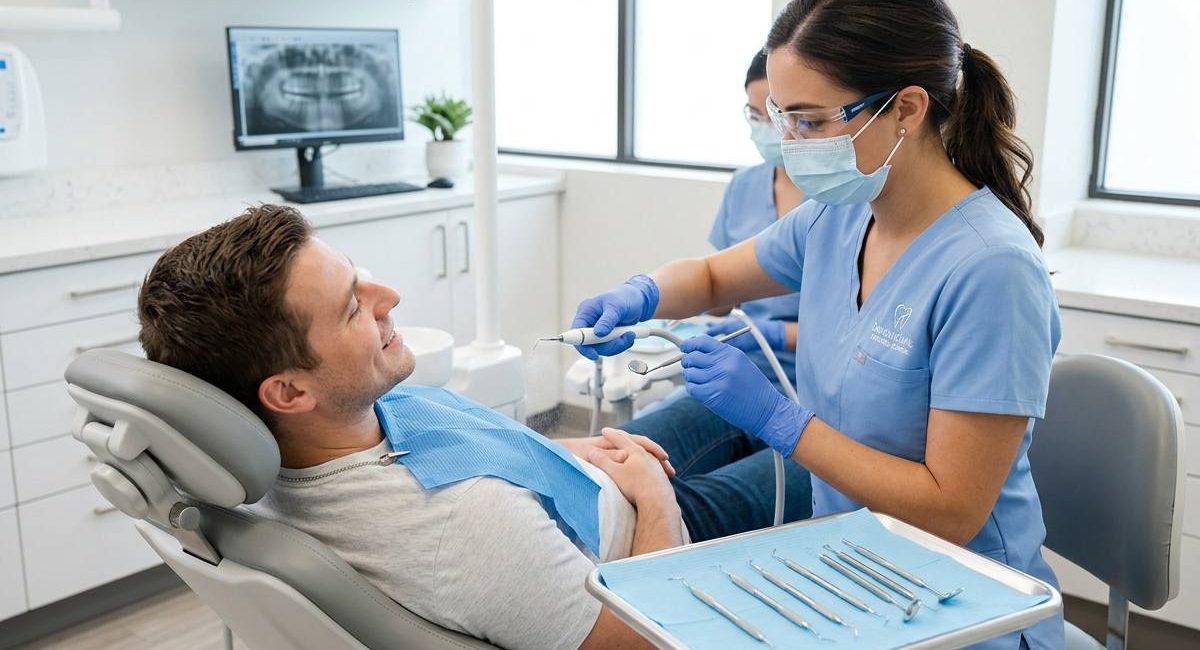
The short answer: You can get professional teeth cleaning at a dental office, dental school clinic, community health center, or a mobile dental clinic. Your best starting point is a licensed general dentist near you — they offer the most comprehensive cleaning and can catch problems early.
Now, let’s break that down so you know exactly what to expect, where to go based on your situation, and how to make the most of your visit.
Why Professional Teeth Cleaning Is Different From Brushing at Home
You might be brushing twice a day and flossing regularly — and that’s great. But here’s the thing: no toothbrush can remove hardened plaque (called tartar or calculus) once it builds up. Only a dental professional with the right tools can do that safely. Skipping professional cleanings can lead to gum disease, cavities, and even tooth loss over time.
5 Places Where You Can Get Professional Teeth Cleaning
1. General Dental Office (Most Common)
This is the go-to option for most people. A licensed dentist or dental hygienist will clean your teeth, check for cavities, take X-rays if needed, and give you personalized advice. Most people visit every 6 months, though your dentist may suggest more frequent visits if you have gum disease or other concerns.
Best for: Everyone. This is the gold standard.
2. Dental School Clinics (Budget-Friendly Option)
If cost is a concern, dental school clinics are a smart choice. Dental students perform the cleaning under close supervision from experienced, licensed dentists. The quality is high, and the cost is significantly lower — sometimes 50–70% cheaper than a private clinic.
Best for: People without insurance or on a tight budget.
3. Community Health Centers (Low-Cost or Free)
Federally qualified health centers (FQHCs) and local public health clinics offer dental services on a sliding fee scale based on your income. Some even offer free cleanings for qualifying individuals. You can find one near you through your local health department or by searching health resources online.
Best for: Uninsured individuals, low-income families, children, and seniors.
4. Mobile or Pop-Up Dental Clinics
These travel to schools, workplaces, community events, or rural areas. They provide basic dental services, including cleanings. They’re not always predictable in schedule, but they’re a great resource if access to a clinic is difficult for you.
Best for: People in underserved or rural areas.
5. Corporate Dental Chains
Brands like Aspen Dental, Gentle Dental, or SmileDirect have locations in many cities. They often offer promotional deals, extended hours, and accept a wide range of insurance plans. They’re convenient if you need flexible scheduling.
Best for: Busy professionals, families, people who need weekend or evening appointments.
What Happens During a Professional Teeth Cleaning?
Here’s a simple breakdown of what to expect:
- Scaling: The hygienist removes plaque and tartar from your teeth and gumline using special tools.
- Polishing: A gritty paste is used to gently polish your teeth and remove surface stains.
- Flossing: Deep flossing to clean between teeth.
- Fluoride treatment (optional): Sometimes applied to strengthen enamel.
- Exam: The dentist checks for cavities, gum issues, or anything that needs attention.
The whole process usually takes 45–60 minutes and is painless for most people.
How Often Should You Get Your Teeth Professionally Cleaned?
For most healthy adults, twice a year (every 6 months) is the standard recommendation. However, if you have a history of gum disease, diabetes, smoke, or are pregnant, your dentist may recommend every 3–4 months.
Final Thought
No matter where you are in life — whether you have insurance or not, live in a city or a small town — there is an option available to you. Professional teeth cleaning is one of the simplest, most impactful things you can do for your long-term health. Your future self will thank you.