
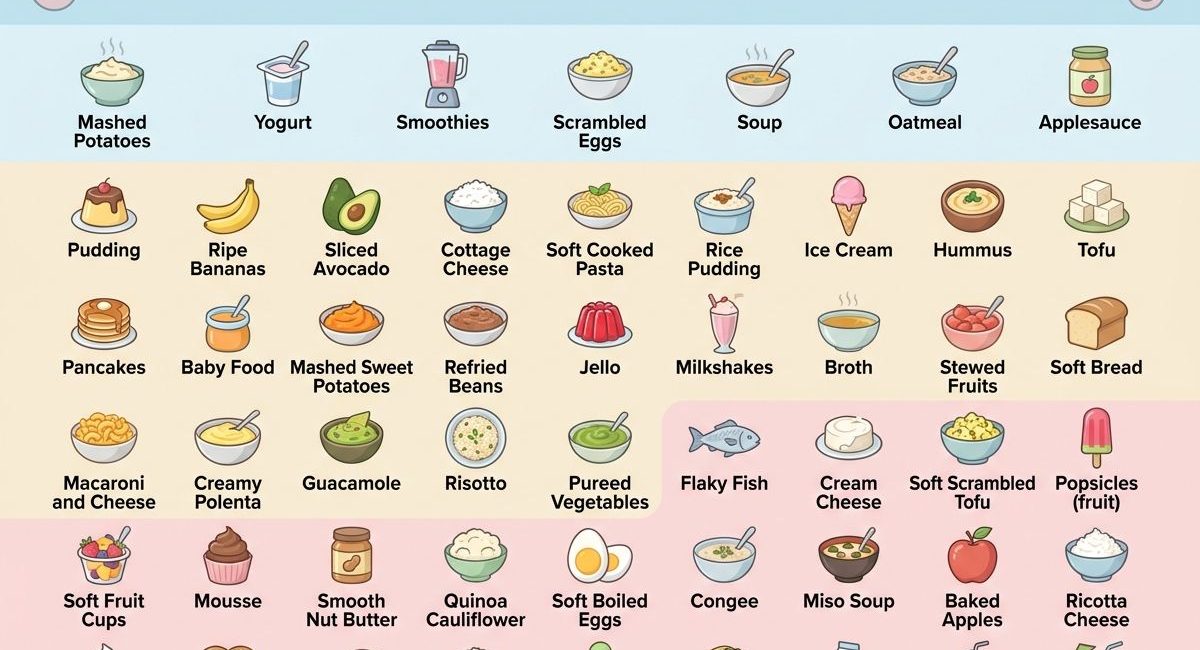
Getting a tooth pulled is already stressful enough, and then your dentist hands you a list of things you cannot eat and suddenly every food you love is off limits. But here is the good news. There are actually plenty of soft foods to eat after tooth extraction that are tasty, filling, and good for your recovery. At SmileBright Dental, patients are often surprised by how many options they actually have. You are not stuck eating plain broth for a week. You just need to know what works and what does not.
The First 48 Hours Are the Most Important
Right after your extraction, a blood clot forms in the socket where your tooth was. That clot is everything. It protects the bone and nerve underneath while your gum heals. Disturb it and you end up with dry socket, which honestly feels worse than the extraction itself. So during those first two days, keep things cool, soft, and gentle. Think yogurt, applesauce, smoothies without a straw, and cold broth. Nothing hot, nothing crunchy, nothing that needs real chewing.
Dairy Options That Feel Like a Hug
Dairy is your best friend after an extraction. Greek yogurt is probably the number one food dentists recommend because it is smooth, high in protein, and easy on a sore mouth. Cottage cheese, ricotta, cream cheese, pudding, and custard all fall in the same category. And yes, ice cream is totally fine. No one is going to argue with that. Just skip the crunchy mix-ins and cone. Milkshakes work too but always eat them with a spoon. Using a straw creates suction that can literally pull the clot out of the socket.
Fruits and Veggies in Disguise
Raw fruits and vegetables are obviously out but in their softer forms they are some of the most healing things you can eat. Mashed bananas are quick and easy. Avocado is soft enough to eat as is and full of healthy fats. Applesauce is a classic for a reason. Mashed sweet potatoes and regular mashed potatoes are warm, filling, and comforting without being hot enough to cause damage. Pureed butternut squash, creamed spinach, smashed peas, mango puree, and pumpkin puree are all worth making. Canned peaches and baked apples that have been peeled are gentle on the wound too.
Protein Without the Chewing
Your body repairs tissue using protein so skipping it during recovery is a mistake a lot of people make. Scrambled eggs are probably the easiest protein you can eat after an extraction, soft, quick to make, and practically no chewing required. Poached eggs are just as good. Soft tofu, hummus, and refried beans are great plant-based options. Smooth peanut butter on soft crustless bread is filling and takes almost no effort. Flaky fish like salmon or cod falls apart on its own. Finely shredded chicken, mashed tuna salad, and egg salad are solid choices by day three or four when you are feeling a bit better. Protein shakes are also a smart way to stay nourished when eating feels like too much work.
Grains and Starches That Actually Satisfy
One thing people do not realize is how satisfying soft grains can be. Lukewarm oatmeal is genuinely comforting after an extraction, just go plain or add a little honey without any nuts or hard fruit pieces. Cream of wheat and cream of rice are even smoother options. Well-cooked pasta, soft mac and cheese, and risotto are the kind of foods that make recovery feel a little less miserable. Polenta, soft white rice, and grits round out this category nicely. Soft bread with the crust removed and pancakes soaked in syrup are also totally fine to eat.
Soups That Do the Heavy Lifting
Soups carry a lot of the nutritional work during recovery. Chicken broth, beef broth, and vegetable broth are hydrating and full of minerals your body needs. Creamy tomato soup, butternut squash soup, blended broccoli cheddar, and cream of mushroom are all great choices that feel like real meals. The one rule with soup is temperature. Always let it cool down to lukewarm before eating. Hot liquid breaks down the blood clot just as fast as a straw does.
What You Should Definitely Avoid
This part matters just as much as the 50 soft foods to eat after tooth extraction list. Hard and crunchy foods like chips, nuts, and pretzels can physically knock the clot loose. Sticky foods like gum and caramel are risky because they grab onto healing tissue. Anything spicy or acidic will irritate the open wound and make the pain worse. Small seeds like sesame or poppy seeds have a habit of getting stuck inside the socket and causing infection. And again, no straws. Not even once.
How Long Should You Keep This Up
Most people can start easing back into normal foods after about a week. By day three you are probably ready for scrambled eggs and soft pasta. By day seven most things are fine. If you had a more complicated extraction like a wisdom tooth removal then your dentist might tell you to stay soft for two weeks. Everybody heals differently so follow what your dentist tells you specifically.