
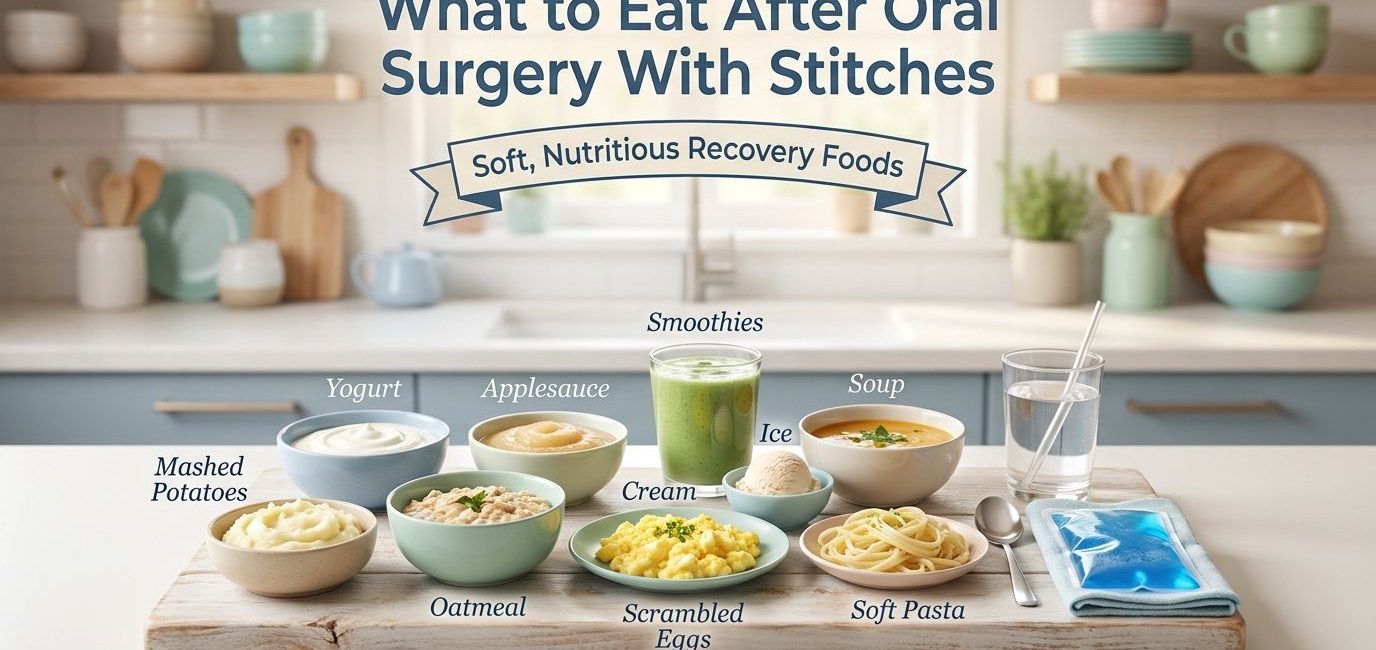
You just got home from oral surgery, your mouth is sore, the gauze is still in, and you’re already wondering what you can eat without messing everything up. Good news, the answer is pretty simple. Stick to soft, cool, or lukewarm foods that don’t need chewing, like yogurt, mashed potatoes, and broth. That’s basically it. At Schleepi, we get asked about this a lot, and the honest truth is that eating well after oral surgery with stitches isn’t complicated, you just need to know the rules before you accidentally break them.
Why Your Stitches Are More Fragile Than You Think
Those stitches in your mouth are holding soft tissue together while it heals underneath. They’re not as tough as they seem. Hard food can catch on them. Sticky food can pull at them. Hot food and drinks can actually break down dissolvable stitches before they’re supposed to go, and on top of that, heat increases swelling and can bring back bleeding you thought had stopped.
One thing people don’t always hear about before surgery is dry socket. It happens when the blood clot over your extraction site gets dislodged. The bone underneath gets exposed and it hurts badly. Straws are usually what cause it because the suction literally lifts the clot out. Skip the straws completely, even for smoothies. Just drink straight from the glass.
Day One is Not the Time to Push It
The first 24 hours are when you need to be the most careful, full stop. Your mouth is still partly numb, the wound is brand new, and your body hasn’t started properly healing yet.
Yogurt is probably the easiest thing to eat on day one. Cold, smooth, a bit of protein in it. Applesauce is another good one. Pudding, plain ice cream, custard, and lukewarm broth are all fine. If you want something more filling, a blended soup cooled down to lukewarm works really well.
Don’t even try soft bread or crackers on day one. It feels like nothing but even gentle chewing puts pressure on a fresh wound that doesn’t need it yet.
What Actually Works During the First Week
Scrambled eggs become a staple for most people once day two or three rolls around. Dentists recommend them often because they’re soft, easy to make, and have enough protein to keep your energy up while you’re mostly stuck on liquids. Mashed potatoes with no lumps are filling and genuinely satisfying. Avocado needs no cooking and is naturally creamy, it’s one of those foods that’s perfect for this situation without even trying to be.
Smooth oatmeal cooked until really soft, soft pasta in small pieces, cottage cheese, mashed lentils, and soft tofu are all worth rotating in as the week goes on. Ripe mashed bananas are good when you just want something that feels more like actual food. If you’re struggling to get enough calories because eating is still exhausting, protein shakes drunk straight from a cup are a practical fix.
Foods That Will Genuinely Set Your Recovery Back
Chips and popcorn are probably the most common mistakes people make. They seem harmless but they break into sharp fragments that get lodged in the stitches. Once that happens, infection risk goes up fast.
Sticky foods are just as bad. Gummy candies, caramel, chewy dense bread, these things can physically grip onto the sutures and tug at them as you swallow. Most people don’t think about that until it’s already causing a problem.
Spicy food causes inflammation. Raw citrus and tomatoes sting more than expected on healing tissue. And hot drinks, even if you’re being careful about how you sip them, the temperature itself is the issue, not the speed you’re drinking at. Let food and drinks cool down properly before they go anywhere near your mouth.
Alcohol should be avoided completely. It slows healing and if you’re on prescription pain medication post-surgery, mixing the two is a real safety risk.
How Long You Actually Need to Keep This Up
Simple extractions usually need about a week of soft eating before things start feeling close to normal again. Wisdom teeth removal or anything more involved can take closer to two weeks.
Your mouth will give you honest feedback. Decreasing pain, less swelling after the first couple of days, and no weird taste or smell from the wound are good signs. But if swelling is getting worse, if pain is increasing instead of going down, or if something smells off near the surgical site, contact your dentist quickly. That can mean infection or dry socket, both of which need prompt treatment.
Whatever instructions your dentist gave you after surgery take priority over anything general you read online. Your procedure was specific to your mouth, and their guidance is built around exactly what was done.