
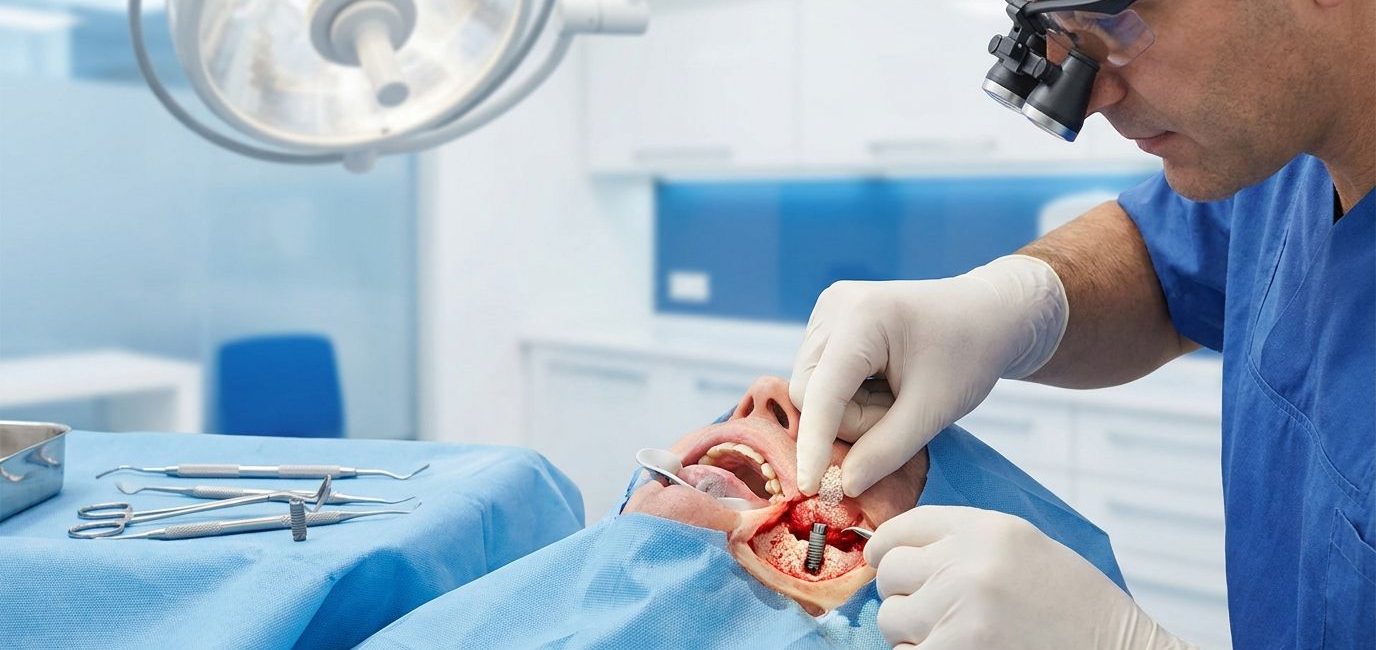
If your dentist has told you that you need bone grafting for dental implants, you are not alone. According to CareCredit, nearly 58% of all dental implant patients require a bone graft before or during their implant procedure. In simple terms, a bone graft rebuilds the jawbone so it is strong and thick enough to hold a dental implant securely in place. Without enough bone, an implant has nothing solid to anchor into, and the procedure cannot succeed.
Why Jawbone Loss Happens
When a tooth is lost or extracted, the jawbone underneath it no longer receives stimulation from chewing and biting. Over time, the body starts to reabsorb that unused bone, causing the jaw to shrink. The longer a tooth has been missing, the more bone loss tends to occur. Gum disease and injuries to the mouth can also break down bone tissue. This is why people who have had missing teeth for years often discover they need bone grafting before moving forward with implants.
What Happens During the Procedure
During a bone graft procedure, a surgeon places graft material into the area of the jaw that needs rebuilding. This material acts as a scaffold that encourages your body to grow new, natural bone around it. Over the following months, your own bone cells gradually replace the graft material, creating a solid and dense foundation. This natural process is called osseointegration, and it is the same process that allows a dental implant post to fuse permanently with the jaw later on.
The procedure is typically performed under local anesthesia, and many patients combine it with a tooth extraction on the same day to reduce the number of separate surgeries needed.
Types of Bone Graft Material
Not all bone grafts use the same material, and your oral surgeon will recommend the best option based on your specific situation.
An autograft uses bone taken directly from your own body, often from the chin, jaw, or hip. Because it is your own tissue, the body accepts it very well and it tends to integrate reliably.
An allograft uses processed and sterilized bone from a human donor. It goes through rigorous testing and preparation, making it safe and widely used in dental practices.
A xenograft comes from an animal source, most commonly bovine (cow) bone. It is treated to remove all organic matter, leaving only a mineral structure that guides new bone growth.
An alloplast is a completely synthetic option made from materials like calcium phosphate or hydroxyapatite, which naturally mirrors the mineral composition of human bone.
Sinus Lift: A Specific Type of Bone Graft
When implants are needed in the upper back jaw, there is often very little bone available because the sinus cavity sits just above that area. A sinus lift is a specialized bone graft procedure where the sinus membrane is gently lifted and graft material is placed in the space below it. This creates enough bone height to place implants safely in the upper jaw. It is one of the more common bone grafting procedures performed alongside implant treatment.
Healing and Timeline
Healing after a bone graft takes time, and patience is an important part of the process. Most patients experience some swelling, mild discomfort, and sensitivity in the days following surgery. Eating soft foods and avoiding hard or crunchy items helps protect the graft site while it heals. Strenuous physical activity is usually limited for a few days after the procedure.
The graft itself typically takes between three to six months to fully mature into solid bone. After that point, your surgeon will evaluate the site and determine when it is ready for the implant to be placed. In some straightforward cases, the implant can be placed at the same time as the graft, but this depends on how much existing bone is present.
How Successful Is Bone Grafting
Bone grafting has a very high success rate. When performed by an experienced oral surgeon and followed by proper aftercare, success rates can reach close to 100% in healthy patients. However, certain factors can reduce the likelihood of success. Smoking is one of the biggest risks, as it restricts blood flow and slows down the healing process significantly. Uncontrolled diabetes, certain medications, and immune system conditions can also affect how well the graft integrates. Being open and honest with your surgeon about your full medical history helps them plan the safest approach for you.
What It Costs
The cost of a dental bone graft varies depending on the size of the area being treated, the type of graft material used, and whether additional procedures like a sinus lift are required. On average, costs can range from $549 to over $5,000. Most dental insurance plans do not cover bone grafting since it is often categorized as a preparatory or elective procedure, though coverage varies by provider. Many dental offices offer financing options to help manage the cost over time.
The Bigger Picture
Bone grafting for dental implants is not just a preparatory step. It is what makes long-term implant success possible. Without sufficient bone, an implant can fail, shift, or cause damage to surrounding structures. Beyond supporting implants, a healthy jawbone also preserves the natural shape of your face. Bone loss in the jaw can cause the face to appear sunken or aged over time, so maintaining bone volume has both functional and aesthetic benefits.
If you have been told you need a bone graft, understanding the process can make it feel far less overwhelming. It is a well-established, routinely performed procedure with strong outcomes when done correctly.